A tote shouldnever stop moving.
Most intermediate bulk containers get used once and crushed. We think that is an absurd way to treat 165 pounds of perfectly good engineering. So we buy your empties, wash them with reclaimed water, grade them, and put them back into service — again, and again, and again. 99.4% of everything that rolls into our yard never sees a landfill.
◦ Today in the yard
- Graded totes on hand4,180
- Food-grade units ready312
- Buyback pickups this week27
- Wash water recycled86%
Scroll the orbit
3201 N Shadeland Ave, Indianapolis
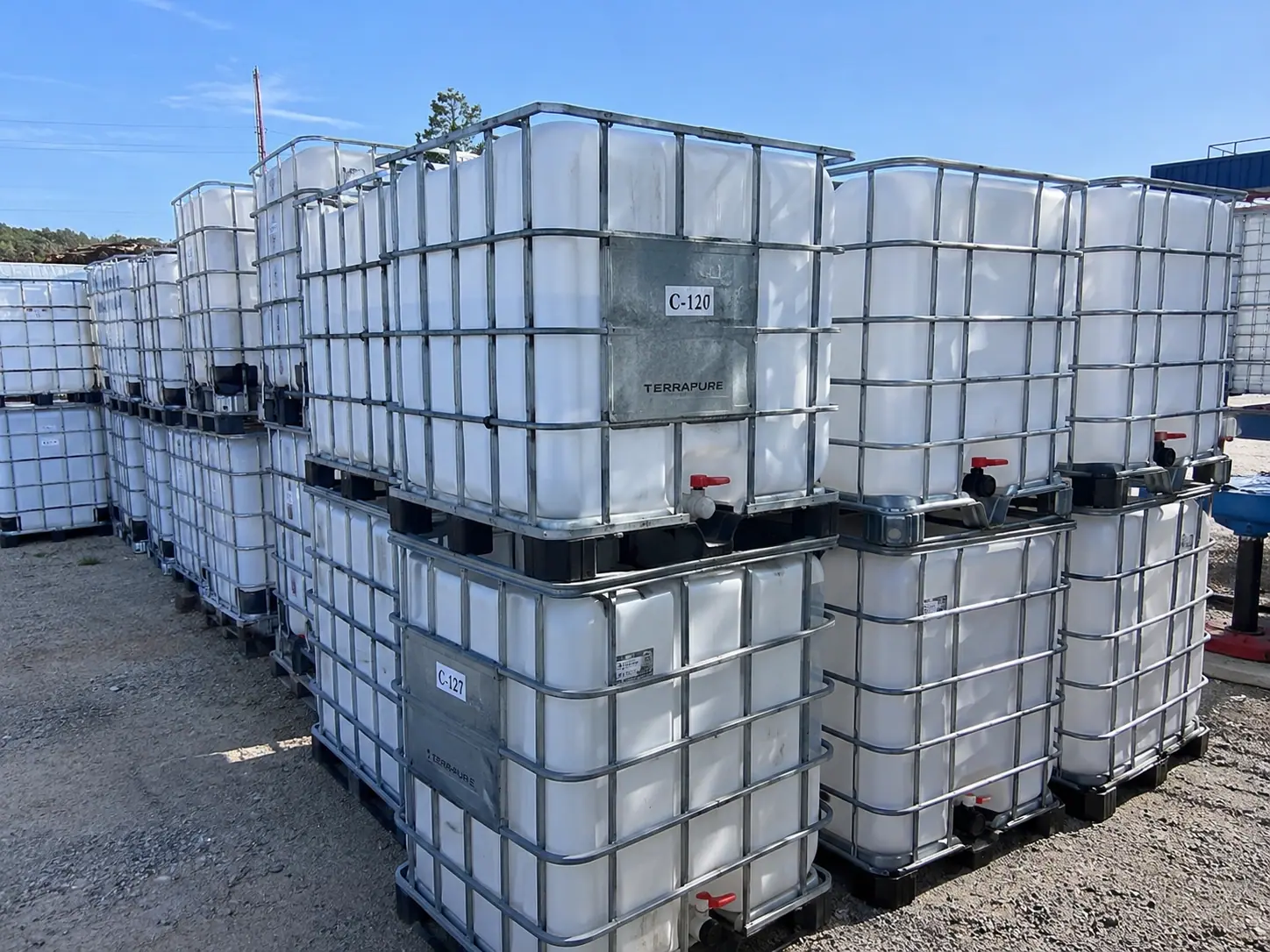
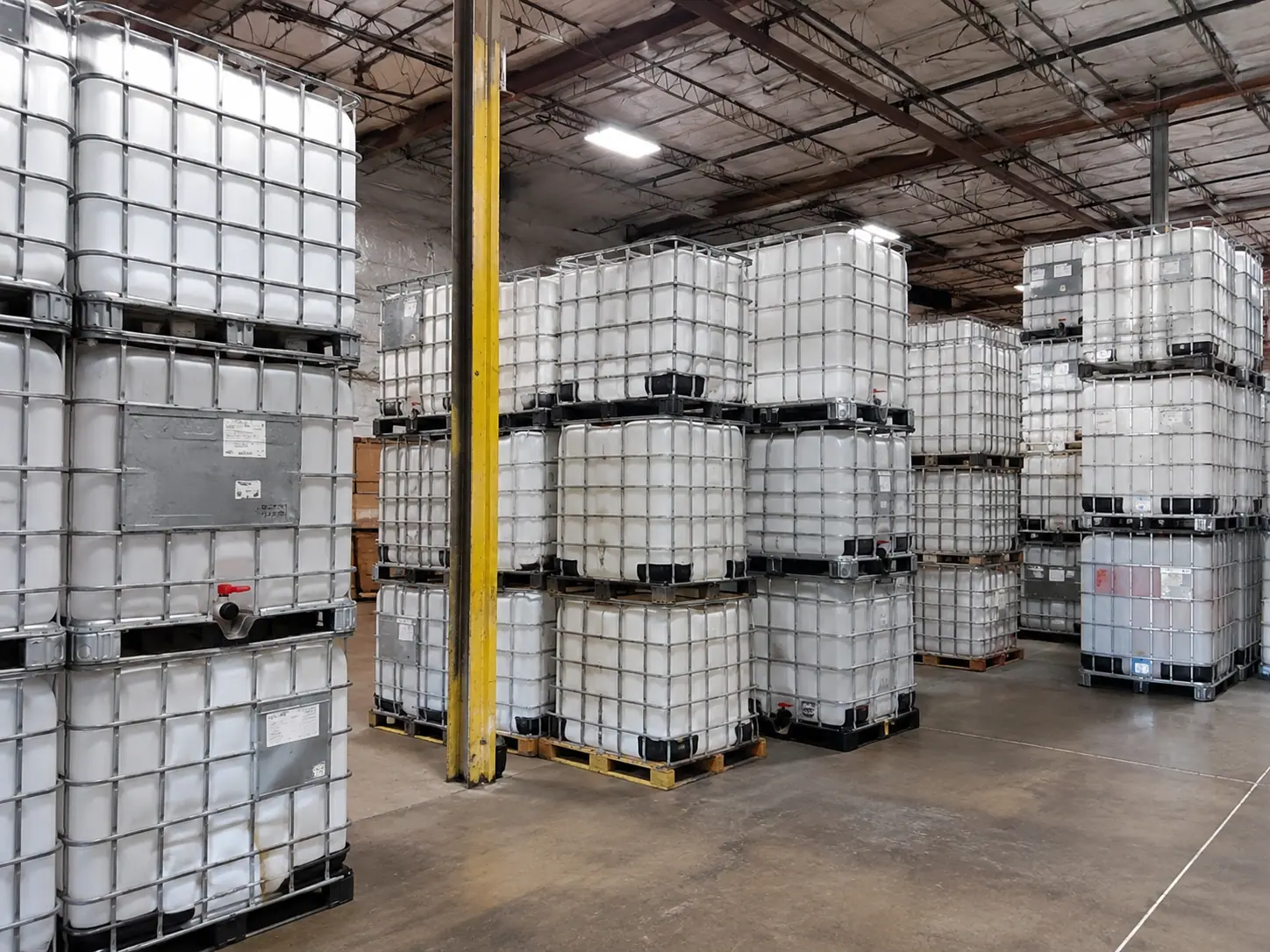
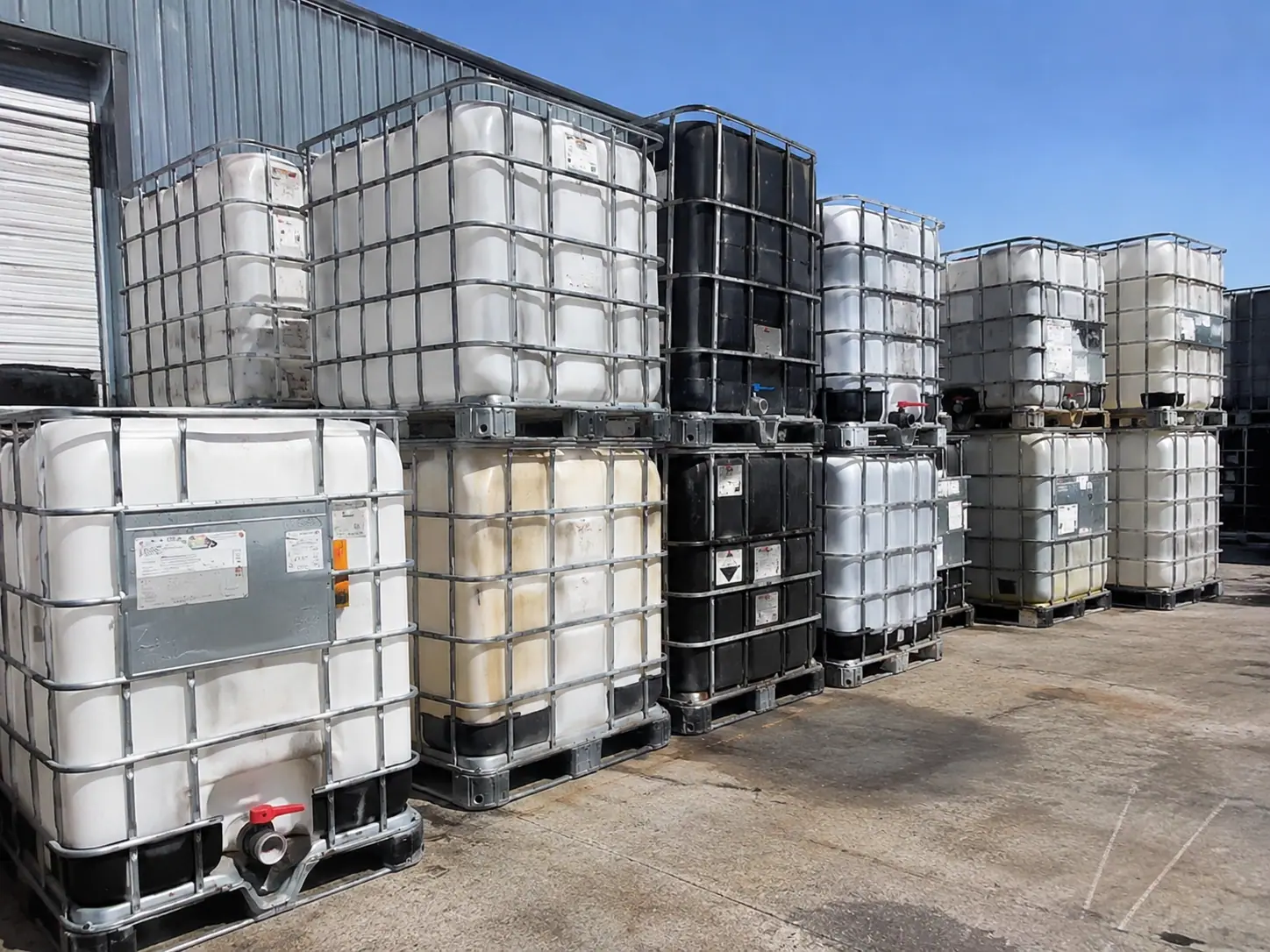
Four thousand containers, and not one of them is new.
The inbound pad on a Tuesday morning. Every unit here arrived with a written cargo declaration, and every one of them will be graded before it moves again.
01 / THE ORBIT
Our whole business, on one dial
One tote. Five stages.
Zero dead ends.
Stage 01 — Recover
We take the empty off your hands
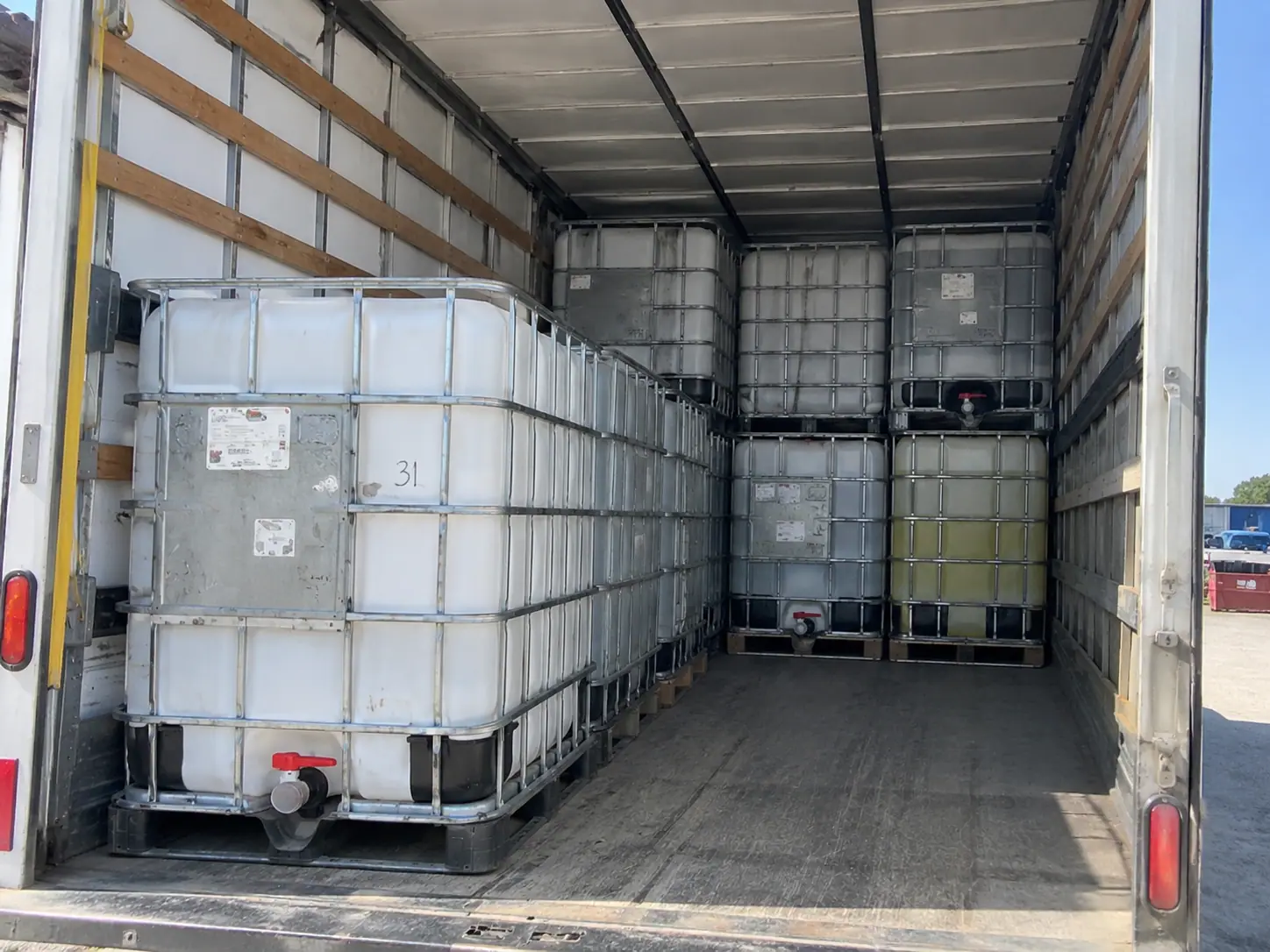
You stop paying to store, crush or landfill empties. We buy them, schedule a truck, and sweep the dock clean. One pickup can clear 80 units and put money back in your budget line.
- Typical pickup20 – 80 units
- Lead time3 – 7 business days
- Radius48 states, nationwide
02 / CATALOG
Product types
Whatever shape your cargo needs
Reconditioned IBC Totes
Washed, leak-tested, re-marked. The workhorse of the circular economy and our best seller.
Open 02Rebottled IBC Totes
A brand-new HDPE bottle inside a reclaimed cage and pallet. New-tote cleanliness, half the footprint.
Open 03Food-Grade Totes
Single-trip units that only ever held edible cargo. Documented, sealed and ready for syrup.
Open 04Stainless Steel IBCs
The closest thing to an immortal container. Pressure-rated, steam-cleanable, endlessly reusable.
Open 05Accessories & Parts
Valves, caps, gaskets, band heaters, lids, pumps, cage patches and dust caps by the case.
Open 06Upcycled Builds
Rain harvesting kits, aquaponic beds, planter walls and jobsite water stations from retired totes.
Open03 / SERVICES
Things we do with a tote
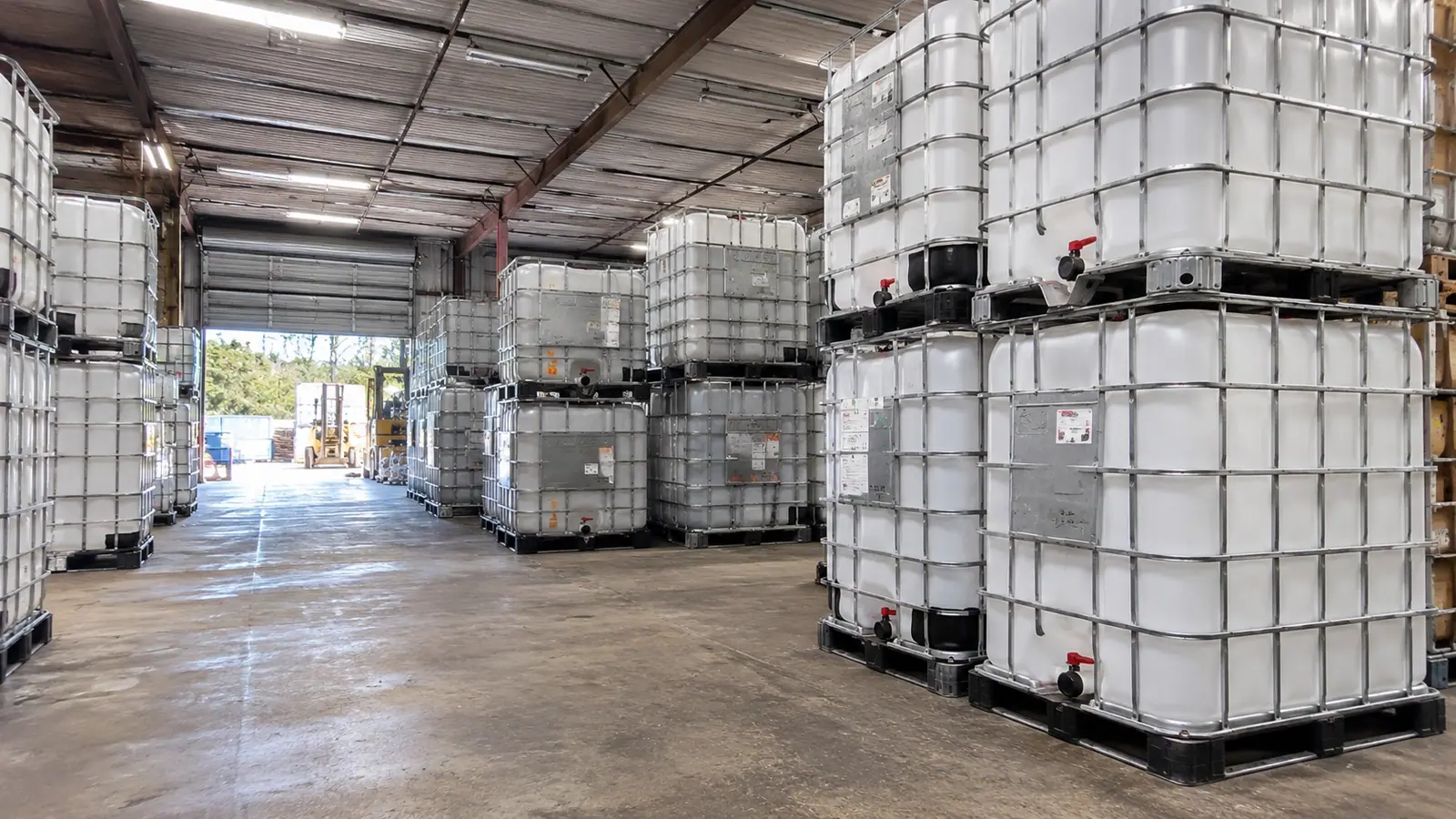
Ten services, one phone-free promise
04 / ECOLOGY
Reuse beats recycling. Every time.
Recycling is the consolation prize.
◦ Reclaim ledger — live
How much does your order actually save?
Bottle, cage and pallet all stay in service. Nothing is melted down, so you avoid the full manufacturing footprint of a new unit.
Put another way
≈ 6,451 miles of driving, not driven.
Reconditioned — whole tote reused. Figures use our own 2024 yard data and published HDPE / steel manufacturing intensities — the full method is on Carbon Math.
05 / SPECIFICATIONS
The size guide people actually bookmark
Forty-plus tables, a UN marking decoder, thread charts, pallet footprints, chemical compatibility notes and our A-to-C grading scale. Written by the people who wash these things, not by a copywriter.
Dimensions
275, 330, 120, 550 gal and metric equivalents.
Fittings
S60x6, 2in NPT, buttress, camlock, ball valves.
Pallets
Plastic, steel, composite and wood footprints.
Grades
What A, B and C mean in our yard, precisely.
Fig. 1 — 275 gal caged composite
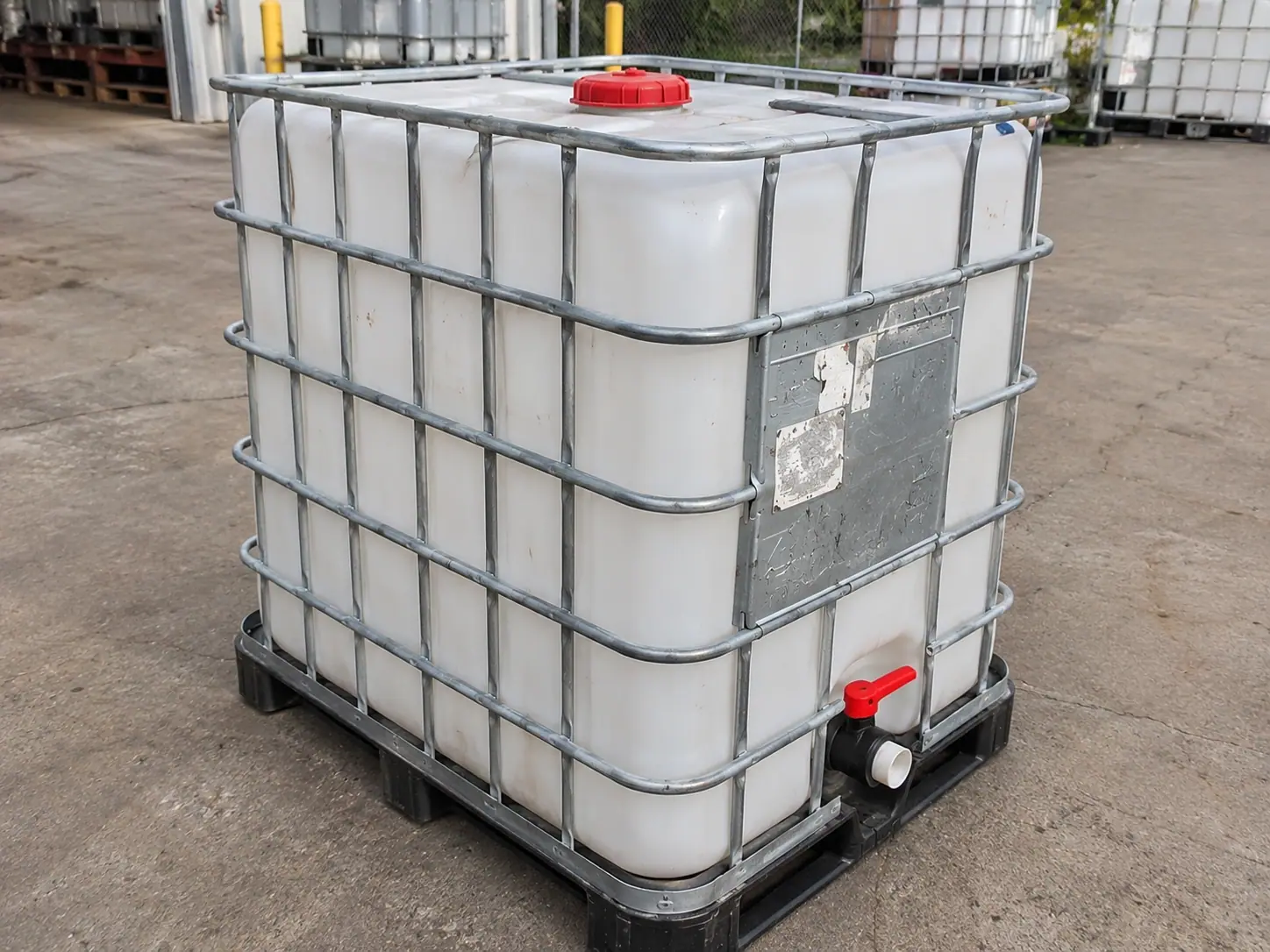 Fig. 2
06 / JOURNAL
From the yard
Notes, teardowns and honest arguments
How totes are reconditioned
A 3,000-word walk through every station on our wash line.
Open Read275 vs. 330 gallon
Same footprint, different height. Which one your dock actually wants.
Open ReadThe carbon cost of a new tote
We priced out the resin, the steel and the freight. It is worse than you think.
Open“People call us a recycler. We are closer to a mechanic. A tote arrives tired, we fix what is tired about it, and it goes back to work.”Marisol Treviño · Yard Operations Lead, ToteOrbit
07 / INDUSTRIES
Who we keep in orbit
- Agriculture & ag-chem
- Food & beverage
- Chemical & industrial
- Construction & water
- Breweries & distilleries
- Municipal fleets
- Cannabis & extraction
- Car wash & detailing
08 / CHOOSING
Reconditioned, rebottled or new
Three ways to buy the same container
| Reconditioned | Rebottled | New | |
|---|---|---|---|
| Bottle | Original, washed | New virgin HDPE | New virgin HDPE |
| Cage and pallet | Original, pressed | Reclaimed, pressed | New |
| Prior cargo question | Documented, carried forward | None — nothing held it | None |
| Typical cost | Lowest | Middle | Highest |
| Lead time | Same week | 2–3 weeks | 2–4 weeks |
| CO₂e avoided vs new | ≈240 lb | ≈118 lb | — |
| Resin certificate | Not applicable | Yes, from the moulder | Yes |
| UN marking | Re-marked after test | Re-marked after test | Manufacturer applied |
| Best when | The cargo is HDPE-compatible and you want volume | You need a never-used bottle at half the footprint | A written spec genuinely demands virgin |
09 / 2024 IN FULL
Published annually, reviewed every January
What a year looks like
| Measure | 2024 | 2015 baseline | Target |
|---|---|---|---|
| Containers handled | 21,400 | 8,900 | No growth target |
| Inbound mass | 2,994,000 lb | — | — |
| Landfill diversion | 99.4% | 78% | Hold, then improve the residual |
| Reuse + repair share of mass | 75.3% | — | Raise against recovery |
| Material recovery share | 11.3% | — | Lower is better |
| Residual to disposal | 18,000 lb | — | Wash sludge project, 2027 |
| Wash water reclaimed | 86% | 0% | 90% by 2027 |
| Water per wash cycle | 11 gal | — | Under 9 gal by 2028 |
| CO₂e avoided vs new units | 41M lb | — | — |
| Deadhead truck miles | 13.6% | — | Under 14% |
| Bottle stream to landfill | 0 lb | — | Held since Q3 2021 |
| Leak failures in service since 2015 | 11 of ~180,000 | — | Zero |
A / SPECIFICATION
Reference
Dimensions, fittings and seat materials
Fig. 1Fig. 2| Capacity | Litres | Footprint | Height | Tare | Gross (water) | Stack loaded |
|---|---|---|---|---|---|---|
| 275 gal | 1,041 | 48 × 40 in | 46 in | ≈140 lb | ≈2,435 lb | 2 high |
| 330 gal | 1,249 | 48 × 40 in | 53 in | ≈155 lb | ≈2,905 lb | 2 high |
| 350 gal | 1,325 | 48 × 40 in | 56 in | ≈165 lb | ≈3,075 lb | 2 high |
| 120 gal | 454 | 40 × 32 in | 38 in | ≈95 lb | ≈1,095 lb | 2 high |
| 180 gal | 681 | 42 × 36 in | 42 in | ≈115 lb | ≈1,616 lb | 2 high |
| 550 gal | 2,082 | 60 × 48 in | 60 in | ≈240 lb | ≈4,830 lb | 1 high |
B / FITTINGS
What threads onto it
Fittings, threads and seat materials
| Fitting | Size | Seals by | Seat options | Typical service |
|---|---|---|---|---|
| S60x6 butterfly valve | 2 in | Flat gasket face | EPDM, Viton, PTFE | The standard IBC outlet |
| S70x6 butterfly valve | 2 in | Flat gasket face | EPDM, Viton | European and some 330 gal units |
| 2 in NPT ball valve, poly | 2 in | Thread flanks + tape | EPDM, Viton | Retrofits, metered dispensing |
| 2 in NPT ball valve, stainless | 2 in | Thread flanks + tape | PTFE | Solvents, pressure, hot cargo |
| 3 in butterfly valve | 3 in | Flat gasket face | EPDM, Viton | Viscous cargo, high flow |
| 6 in fill cap | 6 in | Gasketed lid | EPDM, silicone | Vented or solid — choose deliberately |
| Camlock adapter, type C | 1.5 / 2 in | Cam arms + gasket | Buna, Viton | Repeated connect / disconnect |
| Bulkhead tap | 3/4 in | Both-side gaskets | Brass, poly | Rain kits, site water |
| Material | Good with | Avoid with | Temperature | Cost |
|---|---|---|---|---|
| EPDM | Water, acids, caustics, brine, ag-chem | Oils, fuels, aromatics | -40 to 250 °F | Low |
| Viton (FKM) | Solvents, oils, fuels, aromatics | Ketones, amines, hot steam | -15 to 400 °F | High |
| Nitrile (NBR) | Oils, diesel, greases, hydraulics | Ozone, strong oxidisers | -30 to 250 °F | Low |
| PTFE envelope | Almost all chemistry, high purity | Needs very flat flange faces | -100 to 450 °F | High |
| Silicone | Food contact, wide temperature | Solvents, abrasion | -60 to 450 °F | Medium |
C / COMPATIBILITY
Will HDPE hold it?
Sixteen cargo families, rated
| Cargo family | HDPE | Seat | Notes |
|---|---|---|---|
| Water, potable and non-potable | A | EPDM / silicone | Food-history units for potable |
| Acids and caustics, aqueous | A | EPDM / PTFE | Vent fuming cargo |
| Liquid fertiliser, UAN, NPK | A | EPDM | SG up to 1.32 — check your lift-gate |
| Brine and chloride de-icer | A | EPDM | Hard on galvanising, kind to HDPE |
| Food syrups, oils, concentrates | A | Silicone / Viton | Documented food history only |
| Glycols | A | EPDM | Very common; SG 1.04–1.11 |
| Alcohols | A | Viton / PTFE | Flammable — bond and vent |
| Diesel and gas oil | B | Viton / NBR | Permeates slowly over long storage |
| Mineral spirits | B | Viton | Swells HDPE slowly |
| Surfactants and detergents | B | EPDM | Odour fixation risk — dedicate units |
| Latex, adhesives, water-based paint | A | EPDM | Cures if left. Wash promptly. |
| Ketones, aromatics, chlorinated solvents | C | — | Crazes HDPE. Stainless only. |
| Gasoline and low-conductivity fuels | C | — | Static risk. Steel or stainless. |
| Essential oils, flavour concentrates | C | — | Fixes into the wall permanently. Never. |
| Hydrogen peroxide above 10% | C | — | Decomposition and pressure risk |
| Dairy and hot-fill above 140 °F | C | — | Needs CIP and steam. Stainless. |
Permeation
Small non-polar molecules pass slowly through HDPE rather than attacking it. The bottle looks perfect and your cargo quietly leaves. It is a storage-duration problem: diesel for a week is fine, diesel for a year is not.
Crazing
Ketones, aromatics and chlorinated solvents cause fine surface cracking that propagates under stress. It is invisible until you hold the wall against a raking light, and it is a critical grading failure.
Odour fixation
Terpenes and some surfactants dissolve into the polymer itself rather than sitting on the surface. No wash removes them. This is why a food-grade tote has to have been a food tote from new.
E / GRADING
A grade is a promise, not a mood
How every unit is scored
| # | Point | Critical? |
|---|---|---|
| 01 | Prior cargo declaration — present, written, specific | Yes |
| 02 | Residual liquid — any volume at all | Yes |
| 03 | Odour after wash — fixed odour by trained nose | Yes |
| 04 | Bottle corner stress whitening | No |
| 05 | Interior scoring you can feel | No |
| 06 | Interior crazing — fine surface cracking | Yes |
| 07 | Bottle bulge or deformation | Yes |
| 08 | Wall thickness at the thinnest point | Yes |
| 09 | Dome port condition and flange flatness | No |
| 10 | Outlet threads — cross-threading, chipping | Yes if crossed |
| 11 | Valve function, full open and close | No, replaceable |
| 12 | Gasket condition — compression set, bloom | No, replaceable |
| 13 | Cage squareness along the top rail | No, pressable |
| 14 | Cage weld integrity at tube intersections | Yes |
| 15 | Cage coating and galvanising loss | No |
| 16 | Pallet condition — cracked feet, rot, corrosion | No, replaceable |
| 17 | Forklift pocket integrity | No |
| 18 | UN marking legibility and date | No, re-markable |
| 19 | Leak test under our procedure | Yes |
D / ORDERING
Commercial terms, up front
Lead times, minimums and what happens when it goes wrong
| Item | Detail |
|---|---|
| Minimum order | One unit. No account minimum, no membership. |
| Stock lead time | Grade A and B 275 gal usually ship the same week |
| Rebottled lead time | 2–3 weeks, built to order in bay D |
| Food-grade lead time | 1–3 weeks when stock exists; supply-dependent |
| Full truckload | 45 on a 48 ft flat, 48 in a 53 ft van, 90 empties double-stacked |
| Payment, first order | Prepay by ACH or card |
| Payment, established | Net 30 on credit approval |
| Grade guarantee | Regrade or replace, our freight both ways, 14 days |
| Leak warranty | 30 days from delivery, normal atmospheric service |
| Cancellation | Free until the truck is loaded |
| Returns | 14 days on unused stock units, freight at your cost |
| Sales tax | Indiana resale certificates and out-of-state equivalents accepted |
F / END OF LIFE
Reuse first, recycle last
What happens when the container is finally finished
| Step | Outcome | Share of mass | Cost to us |
|---|---|---|---|
| 01 | Reuse as is — wash and redeploy | 63.9% | 11 gal of mostly reclaimed water |
| 02 | Repair and reuse — valve, gasket, pallet, cage | 11.4% | Parts and bench time |
| 03 | Rebottle — new bottle, reclaimed steel | 9.6% | A new bottle, two thirds of mass retained |
| 04 | Upcycle — rain kits, grow beds, wash stations | 3.2% | Fabrication time |
| 05 | Material recovery — HDPE regrind, steel, wood | 11.3% | Grinding, washing, drying energy |
| 06 | Residual to licensed disposal | 0.6% | Sludge, gasket rubber, fasteners, laminates |
10 / PROCESS
From first email to loaded truck
The sequence, whichever service you need
| Step | Who | Timing | What you get |
|---|---|---|---|
| You write | You | — | One form covers all ten services |
| Routed to a bench | Select Service field | Automatic | The person who can actually answer |
| Written reply | A named specialist | 1 business day | Price, date, documentation list |
| Scope confirmed | Both | Same day | Grade, quantity, freight terms in writing |
| Pulled and graded | Grading bench | 1–3 days | A card per unit, nineteen points |
| Tested and marked | Test cell | Same visit | Leak result, UN re-mark where eligible |
| Loaded and strapped | Yard crew | Dispatch day | Over the cage rail, corner protectors |
| Window confirmed | Dispatch | 24 hr ahead | A half-day window by email |
| Delivered | Our truck or a named carrier | Per freight band | Grade cards and wash records with the load |
| Empties collected | Dispatch | Paired where possible | Usually free above twenty units |
11 / QUESTIONS
Asked constantly
The ten we answer most
Are reconditioned totes actually safe to use?
Every unit is washed on a six-station closed-loop line, scored against nineteen written inspection points and leak-tested before it leaves. We have had eleven leak failures in service out of roughly 180,000 units since 2015 — we keep the count because it keeps us honest. The risk you would be paying a new-tote price to avoid is smaller than the risk posed by your own forklift.
What was in the tote before?
We will tell you, in writing. Every unit carries its prior-cargo declaration forward and that document ships with the order. If we cannot tell you what was in a container, we do not sell it for anything but non-potable water service — and we would not have bought it in the first place.
Can I put food in one?
Only if it came to us with documented food-only prior cargo and was washed under our food programme. Those are sold separately as food-grade totes. No amount of washing converts an industrial unit into a food one — the compounds that matter dissolve into the polymer wall rather than sitting on it.
How many more trips will it do?
A Grade A unit typically has four to eight full service trips left, a Grade B three to six. The limiting factor is almost never the bottle — it is cage geometry and valve thread wear, both of which are repairable. That is why containers come back to us two and three times.
Do you publish prices?
No, and anybody who does is either stale or guessing. Tote pricing follows resin cost, scrap steel and freight — all three move weekly. Ask for today's price and you get today's price, delivered.
Will you buy my empties?
Yes, nationwide, with a written prior-cargo declaration. Collections above twenty units are usually free because they ride home on the return leg of a delivery. The eight variables that set your price are published on the price factors page so you can raise your own quote before you ask.
How fast can you deliver?
Next day to most of the Midwest, two to three days across the eastern half of the country, three to six on the coasts. Rebottled units are a two to three week build regardless of distance. Pick your state on the locations pages for the exact band.
What if I only need one?
That is fine — there is no minimum order. Below about six units the freight costs more than the container, so yard pickup in Indianapolis is far cheaper if you are anywhere nearby. Grouping with another buyer in your city is the other good answer.
Why is there no phone number?
Because the people who know the answers stand at benches, not at desks. A written question reaches the right bench and comes back as an answer you can forward, file and refer to in six months. It is slower by minutes and better by a mile.
Is reuse really better than recycling?
Substantially. Recycling a bottle costs grinding energy, wash water, drying heat, freight and a measurable loss of polymer chain length every cycle. Reusing the same bottle costs a wash — eleven gallons of mostly reclaimed water. That single difference is the entire reason this company exists, and the arithmetic is published in full on Carbon Math.
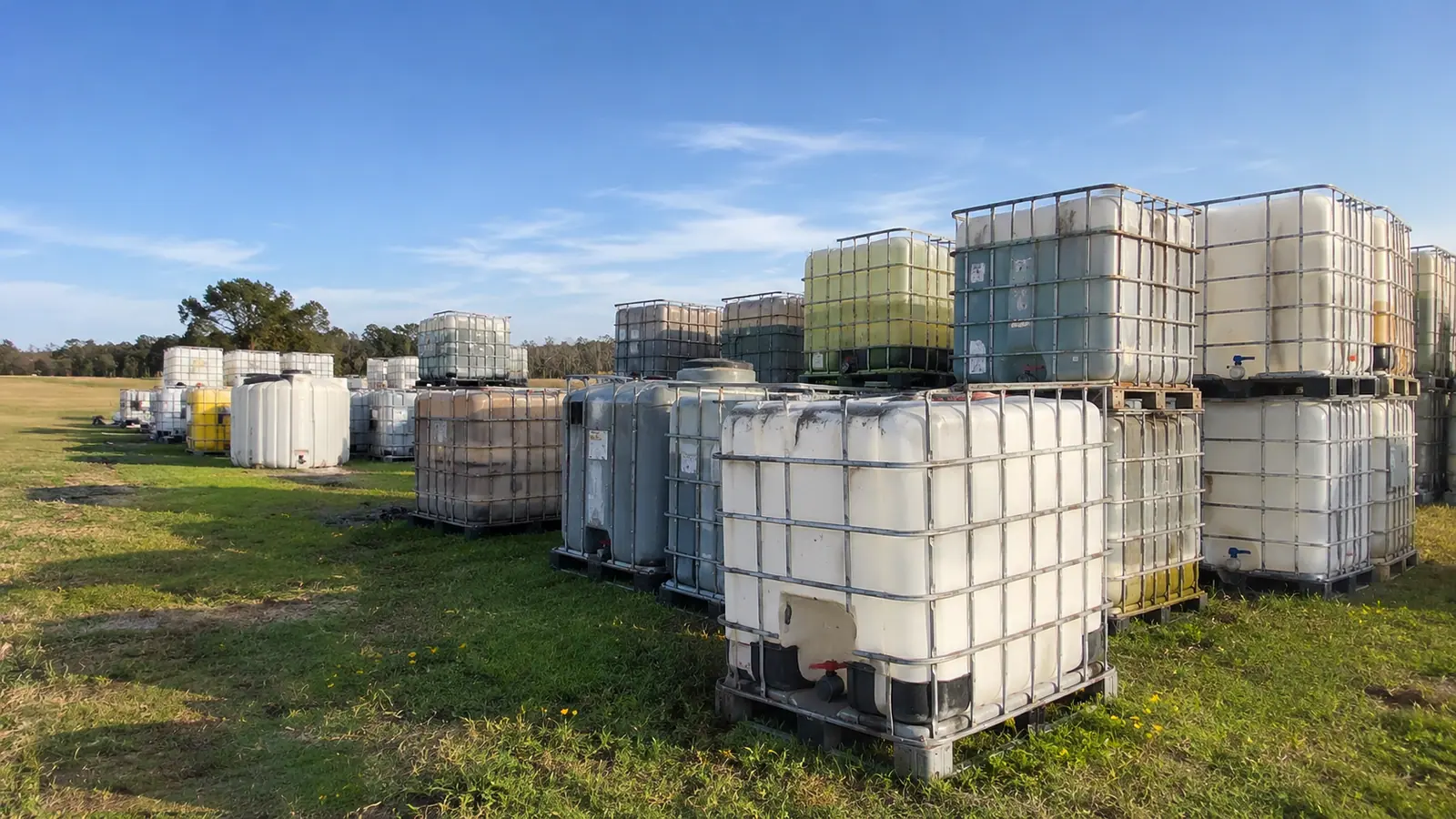
Collected, not crushed
Every one of these was about to become somebody's disposal line.
A single customer release in the Southeast — a field's worth of containers that would otherwise have been crushed for yard space.
No phone room. No sales script. No landfill.
Put your totes back in orbit.
Tell us what you have or what you need. A specialist in Indianapolis reads it and replies within one business day — usually the same afternoon.