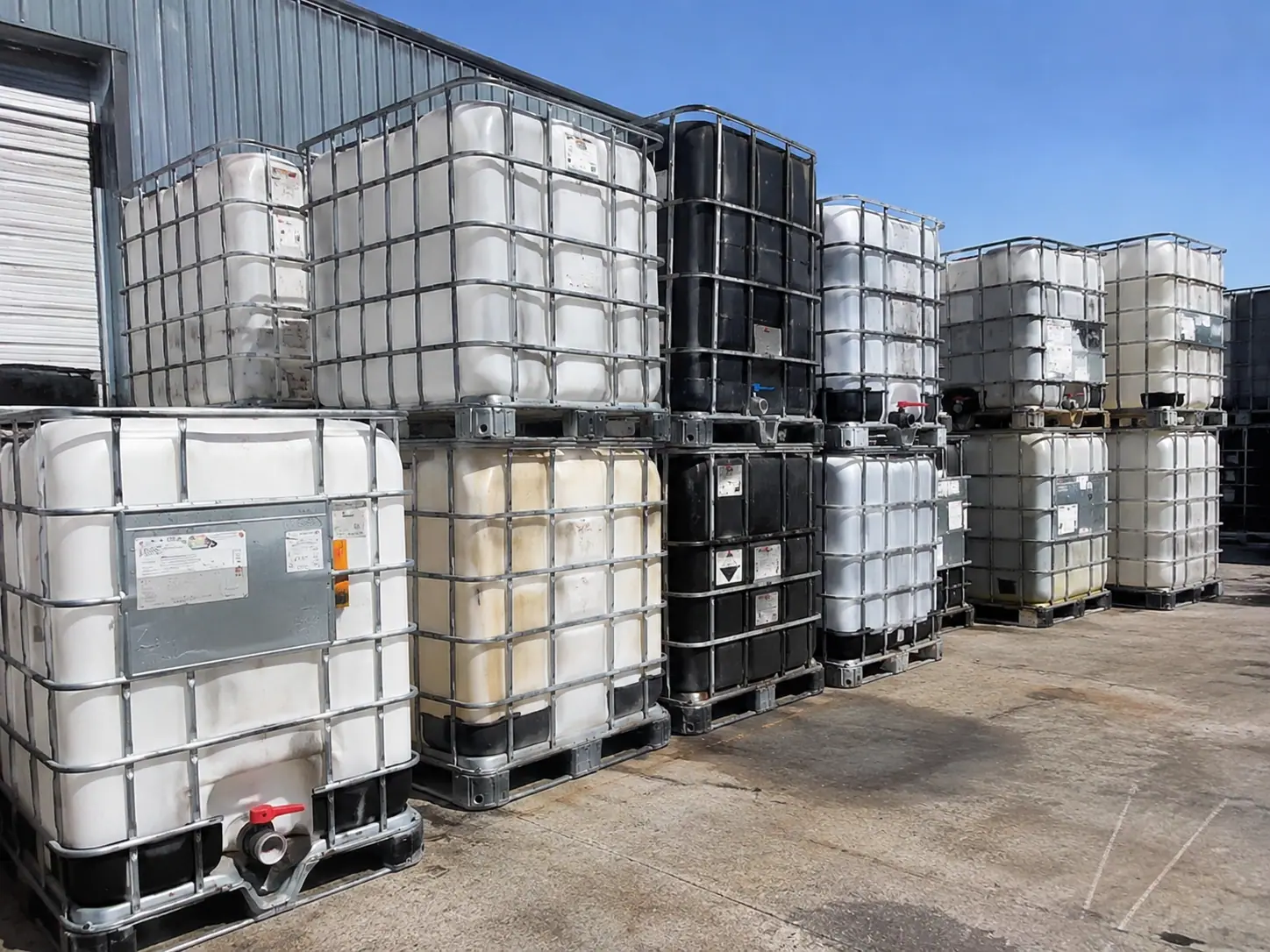
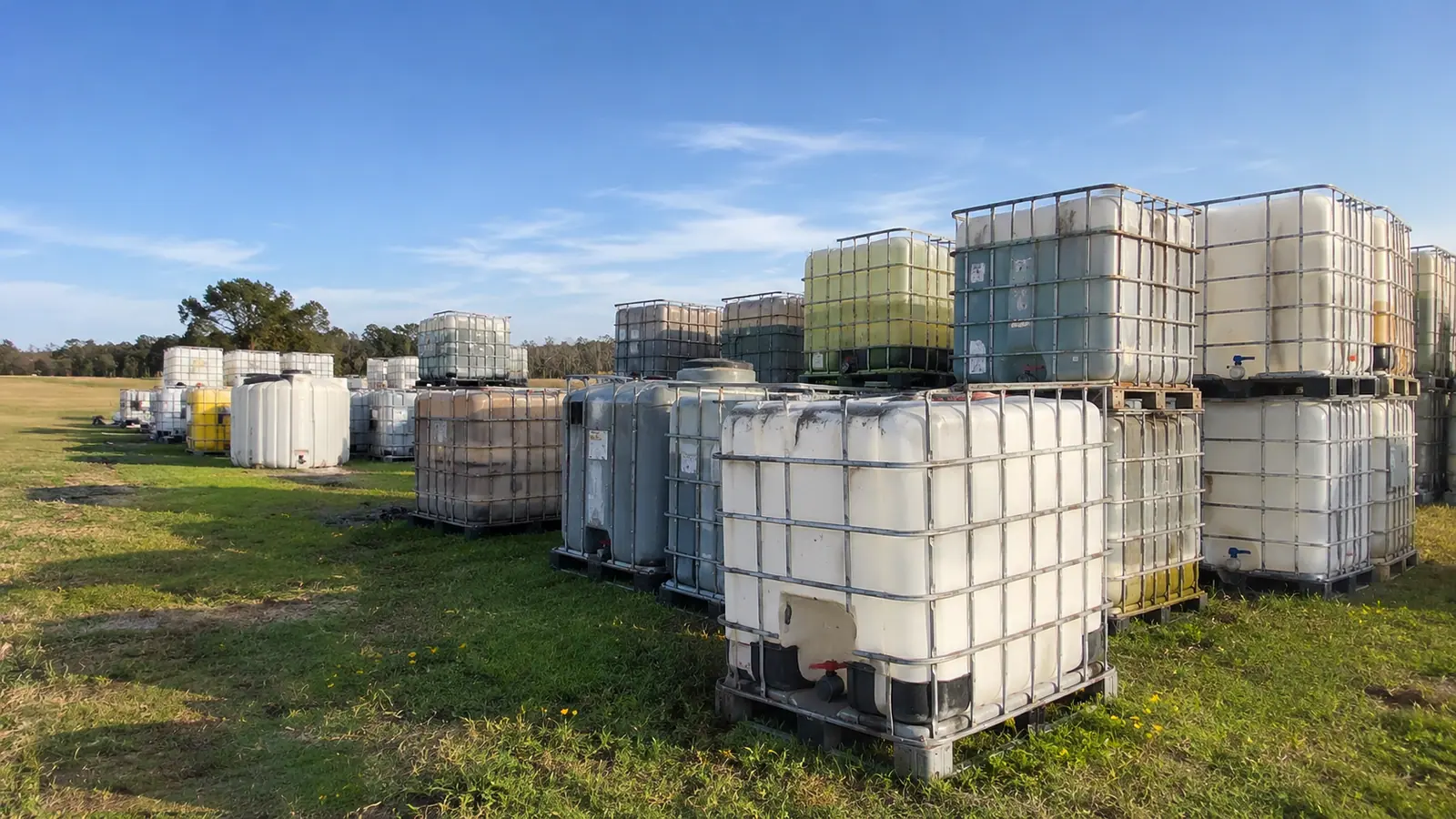
“Food grade” is the most abused phrase in the used container trade. It is used to mean clean, to mean washed, to mean light-coloured, and occasionally to mean nothing at all. In our yard it means three specific things, all three of which are required, and one of which cannot be created after the fact at any price.
Condition one: documented food-only prior cargo
Every cargo the container has ever held must have been a food-contact substance, and that must be stated in writing by the generator. Not described verbally. Not inferred from the plant's industry. Written down, specific, and signed.
This is the condition that cannot be manufactured. A container's history is a fact about the past. If a tote held a surfactant in 2019, it is not a food container in 2026, no matter what has happened to it since. We will explain in a moment why that is physics rather than paperwork pedantry.
In practice almost every food-grade tote we supply is a single-trip unit from a beverage, syrup, oil or concentrate plant. A packer fills a new tote with glucose syrup, ships it, the customer empties it, and the tote becomes an inconvenience. One cargo, edible, documented. That is the cleanest possible input and it is also why supply is lumpy — we cannot create food history, so when nobody releases units we have a waiting list rather than stock.
Condition two: wash chemistry listed under 21 CFR 178.1010
Section 178.1010 of Title 21 covers sanitising solutions permitted for use on food-contact surfaces. Washing a food container with agents outside that list means the surface has been treated with something not cleared for the purpose, which defeats the exercise.
We log chemistry, concentration, temperature, cycle time and operator for every batch, and that log becomes the wash record that ships with the order. Your auditor will ask for it; we would rather hand it over than explain why we do not have it.
Dedicated scheduling matters too. A food run does not share a tank with a latex run, which is why food programme washes are scheduled rather than slotted in whenever there is a gap.
Condition three: sealed immediately after drying
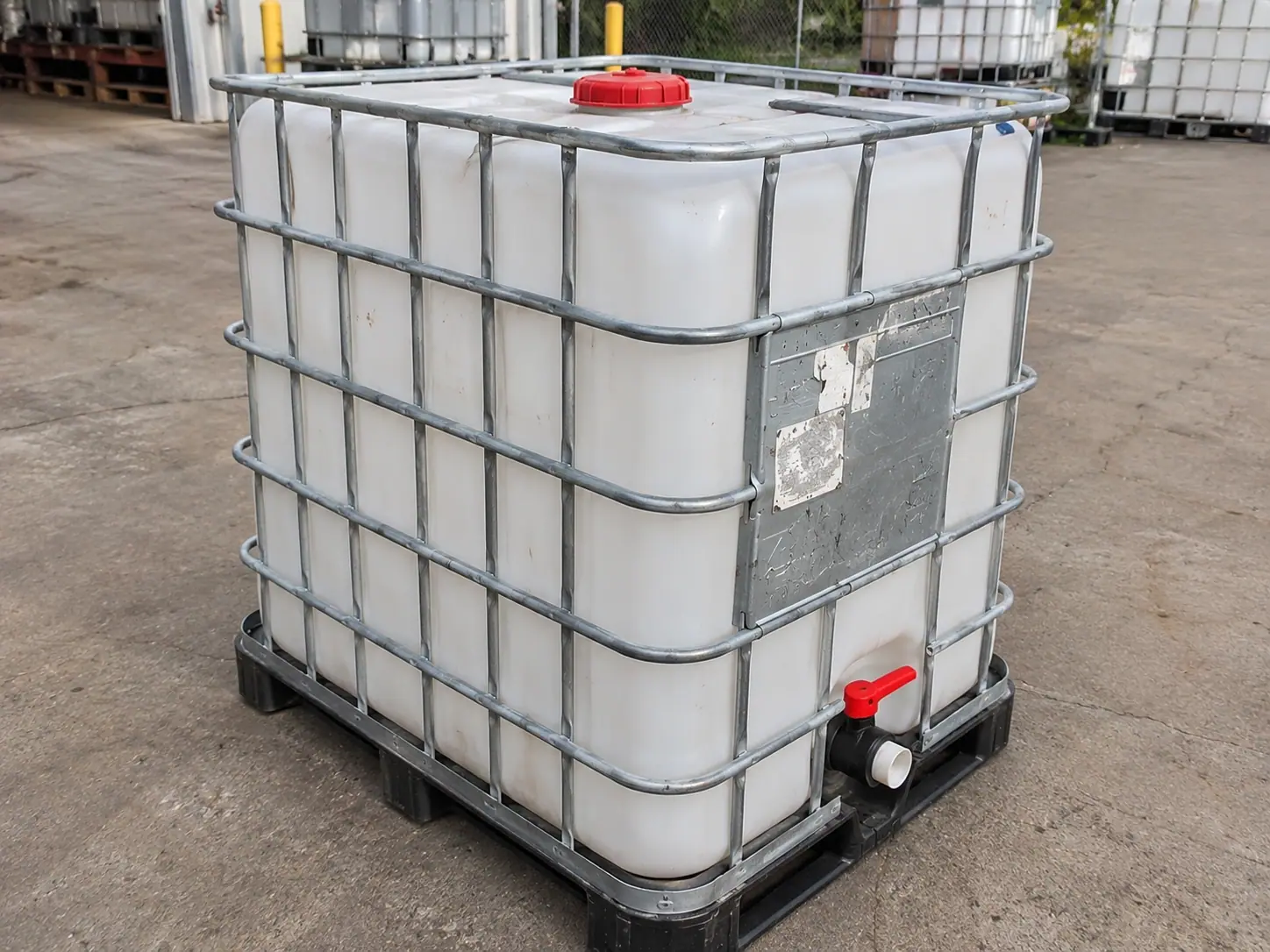
A clean container that sits open in a yard for a week is no longer a clean container. Valve and six-inch cap go on the moment the unit comes off the dry stage, with a tamper-evident band. If the band is broken when it reaches you, the unit is not food grade and we will replace it.
This is the least technical of the three conditions and the one most often skipped by suppliers, because it costs a few dollars per unit and nobody can see it on a photograph.
Why washing cannot create condition one
Here is the part that generates the most argument, so it is worth being precise.
HDPE is not an inert barrier. It is a semi-crystalline polymer with amorphous regions that certain classes of compound dissolve into. Terpenes — the aromatic compounds in citrus, mint and most essential oils — are the classic example. So are many non-ionic surfactants, and several solvents. These compounds do not sit on the surface where a wash can reach them. They migrate into the polymer matrix and then slowly migrate back out, which is why a tote that held pine cleaner in 2018 still smells of pine cleaner in 2026, no matter how many caustic cycles it has been through.
Washing removes residue. It does not remove compounds that have become part of the wall. That is the whole reason the first condition exists, and it is why we refuse units that held essential oils or flavour concentrates in either direction — we will not buy them and we will not sell them.
What we will not claim
We supply food-grade containers. We do not certify your process. Whether a particular container is suitable for your specific product, your fill temperature, your shelf life and your HACCP plan is a determination only your food safety team can make. Any supplier who tells you otherwise is telling you something useful about themselves.
We also do not use “food grade” as a synonym for “very clean.” A general industrial reconditioned unit off our line is extremely clean. It is not a food container, and we will not describe it as one because it would make the phrase worthless for the units where it actually matters.
Questions worth asking any supplier
- Can I see the written prior-cargo declaration for these specific units?
- What wash agents did you use, and are they listed under 21 CFR 178.1010?
- Can I see the wash record with chemistry and temperature?
- When was the valve sealed relative to the dry stage?
- Is this a single-trip unit, and from what kind of plant?
- What would disqualify a unit from your food programme?
That last one is the most revealing. A supplier with a real programme will answer it quickly and specifically. Ours is on the food-grade totes page, including the cargo classes that disqualify a unit instantly.