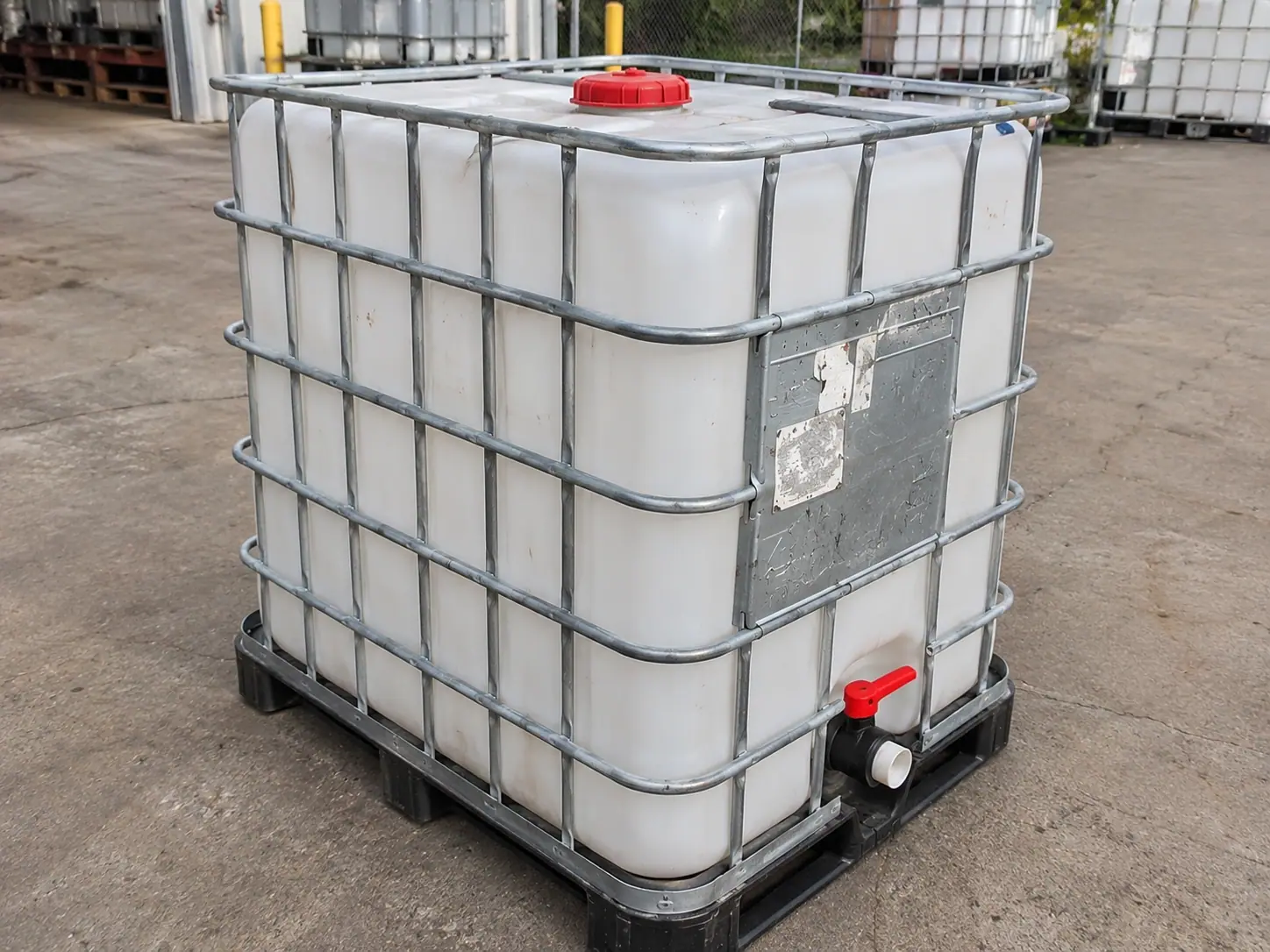
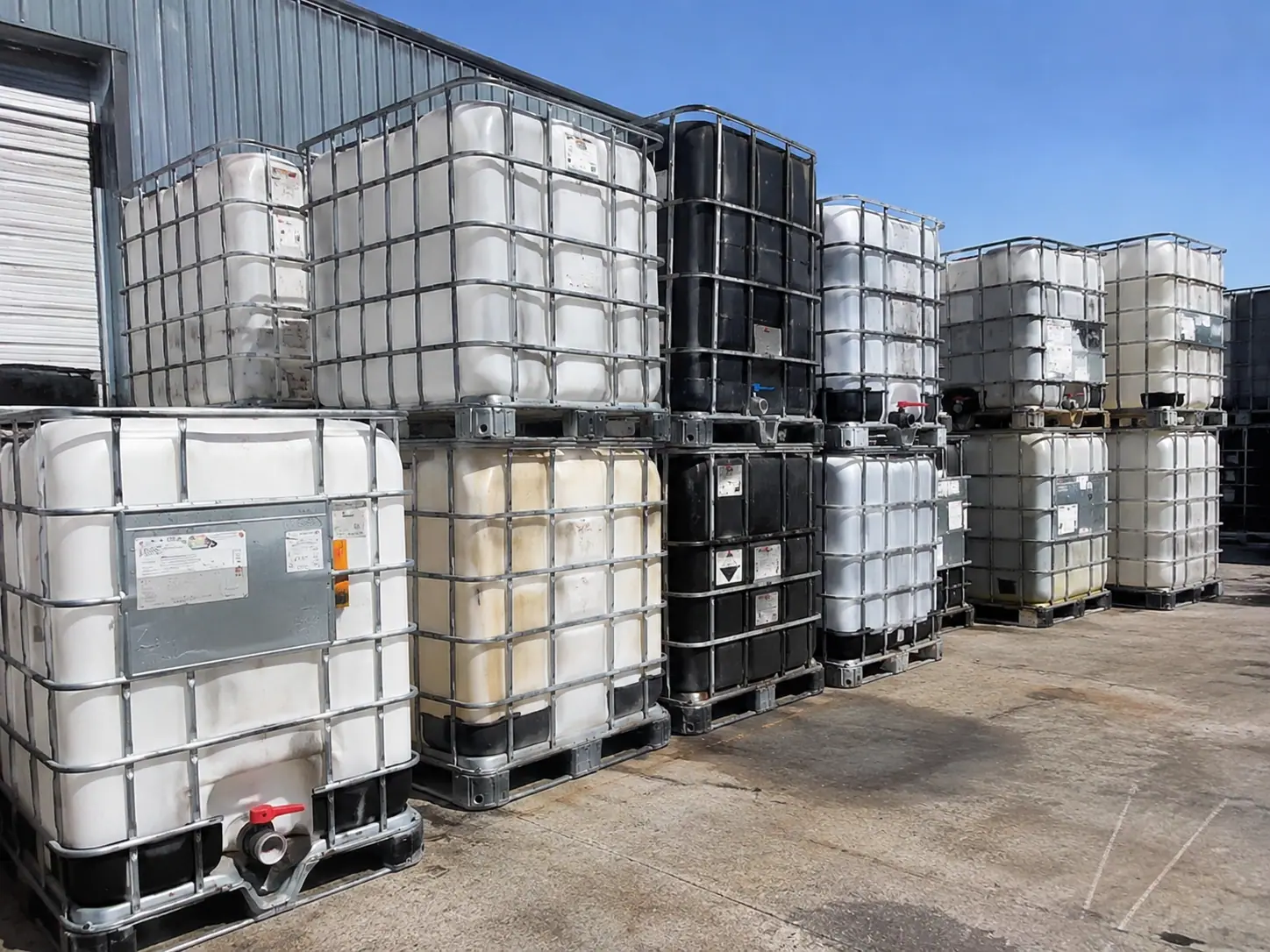
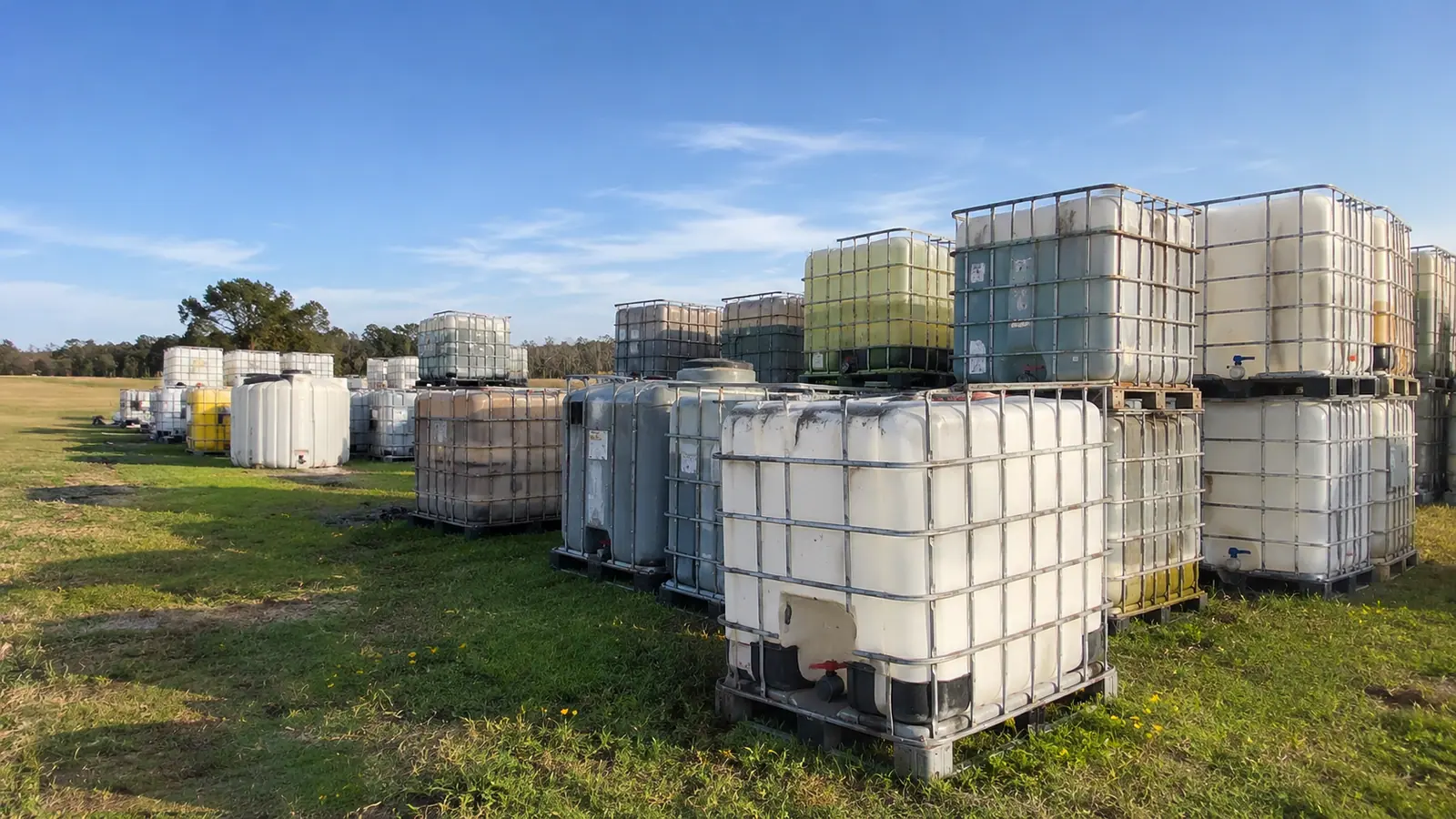
A 275 and a 330 gallon caged composite IBC share a footprint, a pallet, a forklift entry, a valve thread and a lid. The 330 is seven inches taller. That is the entire difference, and it causes more avoidable problems than any other specification choice in this industry.
The numbers first
| 275 gal | 330 gal | Difference | |
|---|---|---|---|
| Capacity | 275 gal / 1,041 L | 330 gal / 1,249 L | +55 gal / +20% |
| Footprint | 48 × 40 in | 48 × 40 in | Identical |
| Height | 46 in | 53 in | +7 in |
| Tare weight | ≈140 lb | ≈155 lb | +15 lb |
| Gross, water | ≈2,435 lb | ≈2,905 lb | +470 lb |
| Interior height | 41 in | 48 in | +7 in |
| Units per 48 ft flatbed | 45 | 45 | Identical |
| Stacked two high | 96 in | 110 in | +14 in |
Why the 330 looks like the obvious choice
Twenty per cent more cargo, the same floor space, the same truck count, fifteen extra pounds of tare. On paper the 330 is free capacity. Per gallon shipped it is cheaper on freight, cheaper on handling, and cheaper on yard space. If you fill and ship by volume, it is genuinely the better container.
And here is where it goes wrong
Stacking under a sprinkler head
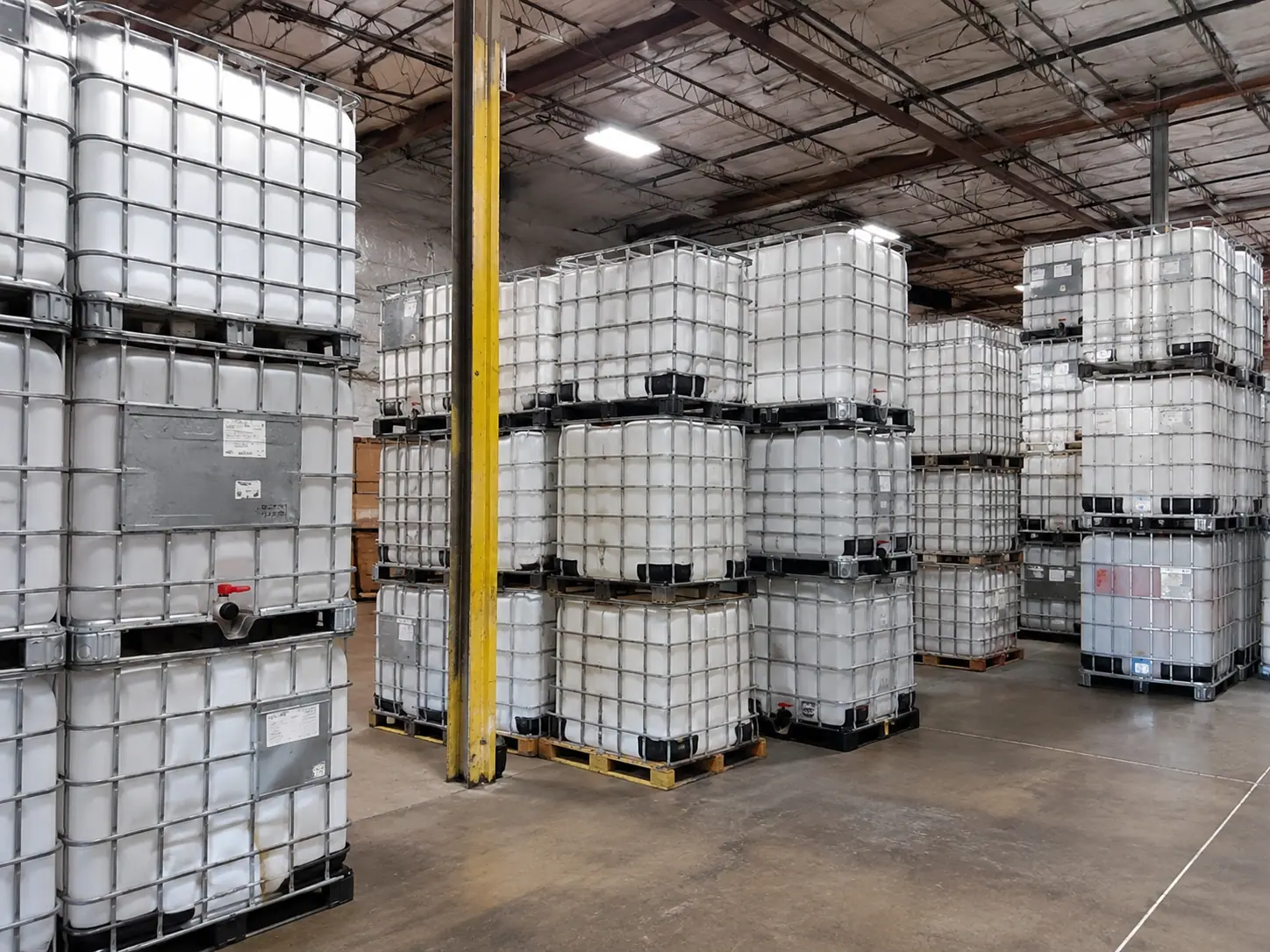
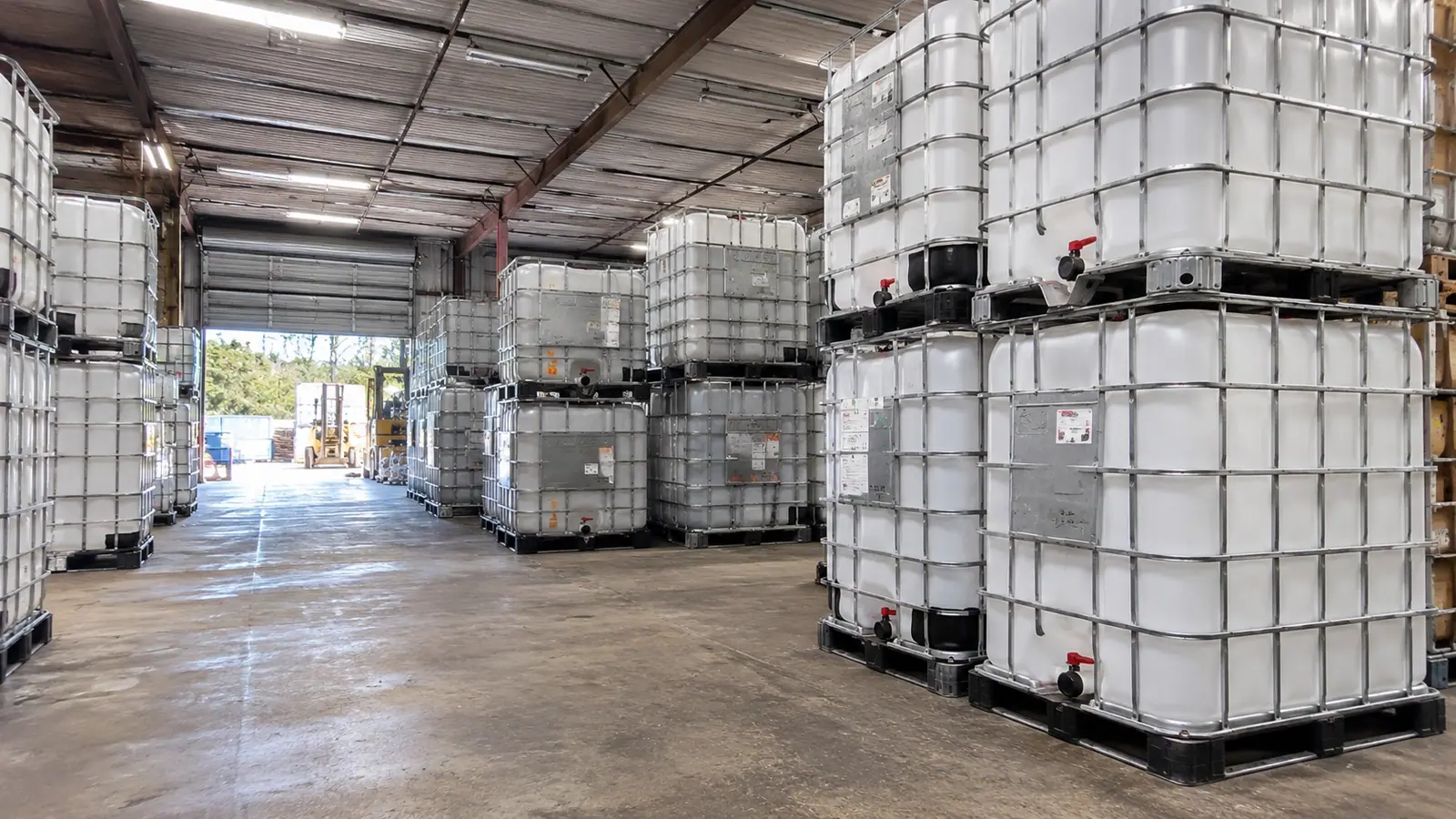
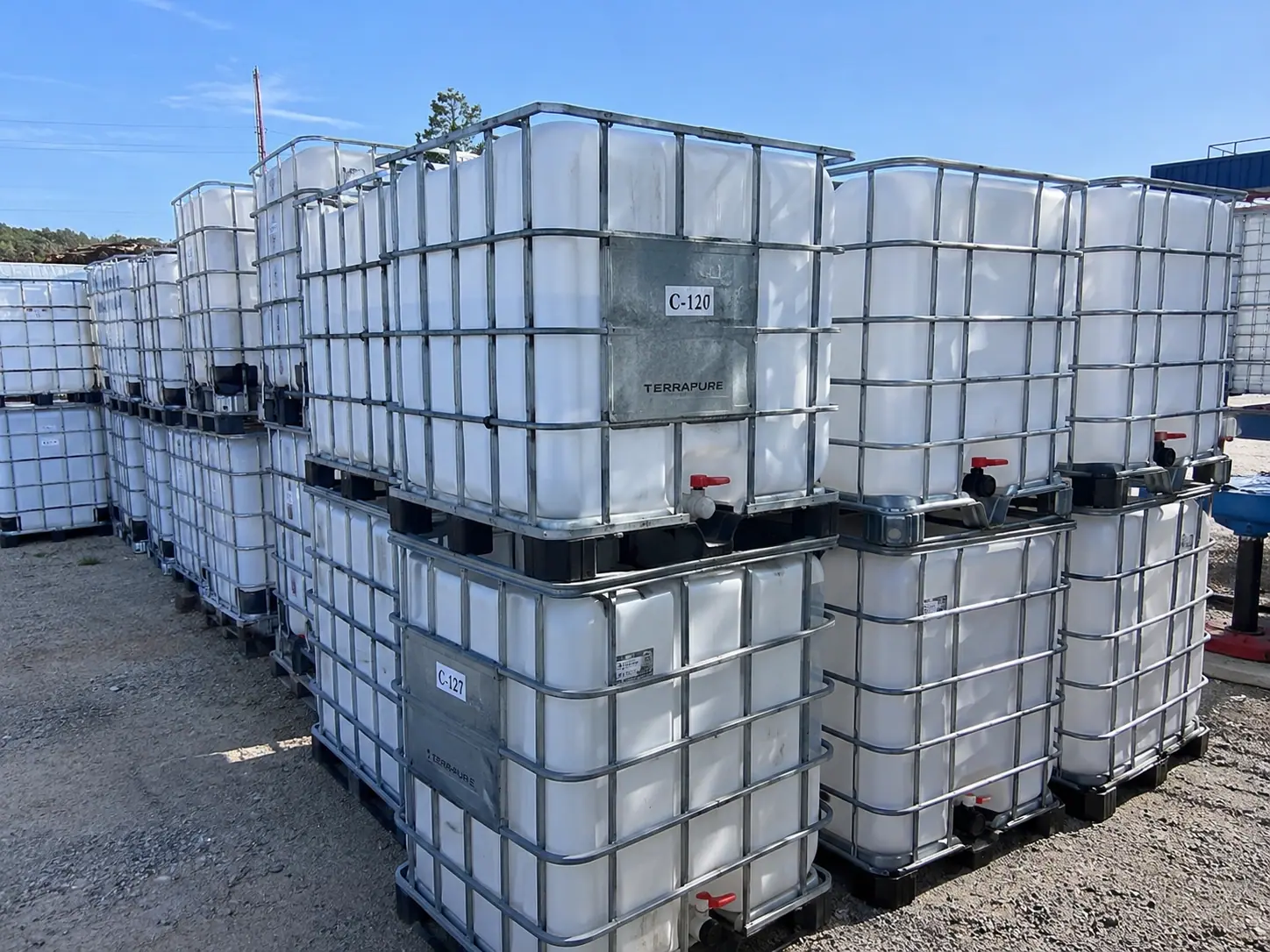
Two 275s stacked is 96 inches. Two 330s is 110 inches. Most warehouse sprinkler clearance rules require 18 inches below the deflector, and a great many older facilities have heads at 12 to 14 feet. Do the arithmetic before you order, because discovering it with 45 units on your floor is an expensive afternoon.
Mezzanines, dock canopies and trailer doors
A 53-inch unit on a 6-inch forklift tine clearance, lifted to clear a dock plate, is suddenly a 65-inch object going through a 7-foot doorway on a tilting mast. It fits. It fits with much less margin than the 275, and in our experience that margin is where bottle damage comes from.
Lift-gate ratings
A loaded 330 of water is 2,905 pounds. A great many lift-gates are rated at 2,500 or 3,000 pounds and that rating assumes centred load. If your cargo has a specific gravity above 1.0 — and a lot of industrial cargo does — the 330 goes out of range quickly. UAN 32 at SG 1.32 in a 330 is about 3,790 pounds.
Pump suction and the last gallon
A deeper bottle means a longer dip tube and more static head for your transfer pump. For a diaphragm pump on viscous cargo this matters. If you are running a marginal pump at the edge of its capability on 275s, a 330 will expose that.
Maximum permitted gross mass
For regulated cargo the marking governs, not the arithmetic. A 330's marking has its own maximum permitted gross mass and it is not necessarily 20 per cent higher than the 275's. Read the stamp — our marking decoder explains which field to look at.
So which should you buy?
Our actual advice, given dozens of times a month:
- Buy 275s if you stack two high indoors, if you have any ceiling or doorway constraint you have not measured, if your cargo has a specific gravity above about 1.15, or if you deliver to customers whose dock situation you do not control.
- Buy 330s if you ship by volume on full truckloads, you never stack loaded units, your cargo is water-like, and your dock and your customers' docks are both known quantities.
- Buy both if you can. Plenty of our customers run 330s for plant-to-plant transfer and 275s for customer delivery, which is exactly the right instinct.
The seven inches, summarised
There is no bad choice here. There is only an unmeasured one. Before you order a 330, measure your doorway height, your sprinkler clearance and your lift-gate rating. Three numbers, four minutes, and you will never think about this article again.
Full dimension tables are in chapter one of the size guide, and if you would rather we checked the fit for you, send us those three numbers in the form above.